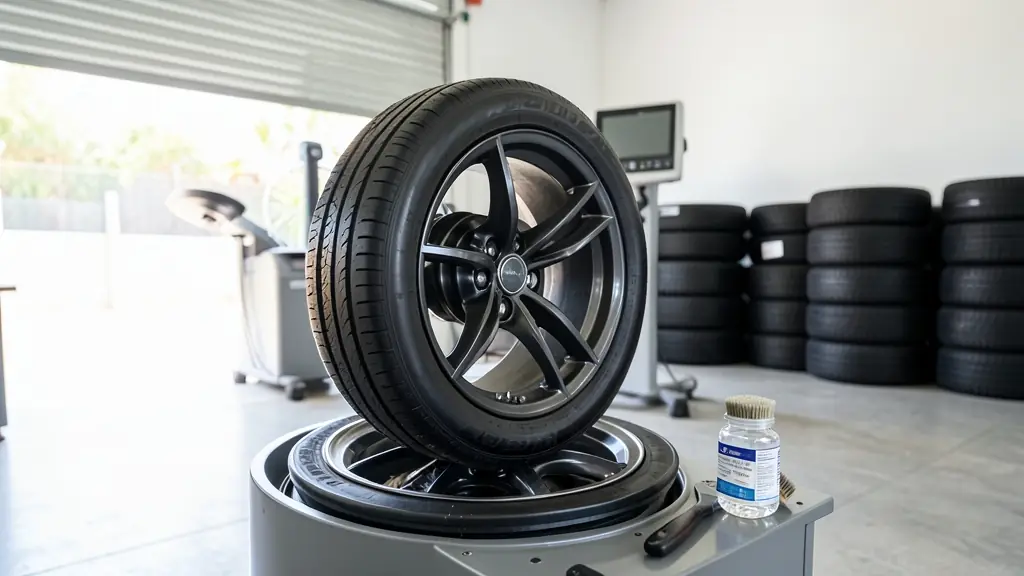
A tyre size such as 205/55 R16 is three measurements in one: the width of the tyre in millimetres, the sidewall height as a percentage of that width, and the rim diameter in inches. Change any of them and the overall diameter of the wheel changes, which moves your speedometer, your odometer, your gearing and how much room the tyre has in the arch.
How to read a tyre size
Take 205/55 R16 91V as the example:
- 205 is the section width in millimetres, sidewall to sidewall.
- 55 is the aspect ratio: the sidewall is 55% of the width, so about 113 mm tall.
- R means radial construction, which almost every car tyre is.
- 16 is the rim diameter in inches.
- 91V is the load index and speed rating. Read them with the load index and speed rating checker.
The overall diameter is the rim diameter plus two sidewalls: 16 x 25.4 mm plus 2 x 113 mm, about 632 mm.
How big a difference is too big
A common rule of thumb in tyre shops is to keep the new overall diameter within about 3% of the original. Inside that, the speedometer error is small, the ABS and stability systems are happy and the tyre usually clears the arch and the suspension. Beyond it, you can get rubbing on full lock or over bumps, a speedometer that reads noticeably low, and warning lights on some vehicles.
When you go up a rim size, the usual approach is "plus sizing": a wider tyre with a lower profile so the overall diameter stays about the same, for example 205/55 R16 to 225/45 R17. Check the load index of the new size is at least as high as the original, and ask the fitment centre to check clearance before they fit all four.
What the speedometer error means
The speedometer counts how fast the wheels turn. A taller tyre covers more road per turn, so at an indicated 100 km/h you are really going a little faster than 100. A shorter tyre does the opposite. Most speedometers are set to read slightly high from the factory, so a small increase in diameter often brings them closer to the true speed, but traffic cameras measure your real speed, not what the dial says. The odometer and the service intervals move by the same percentage.